
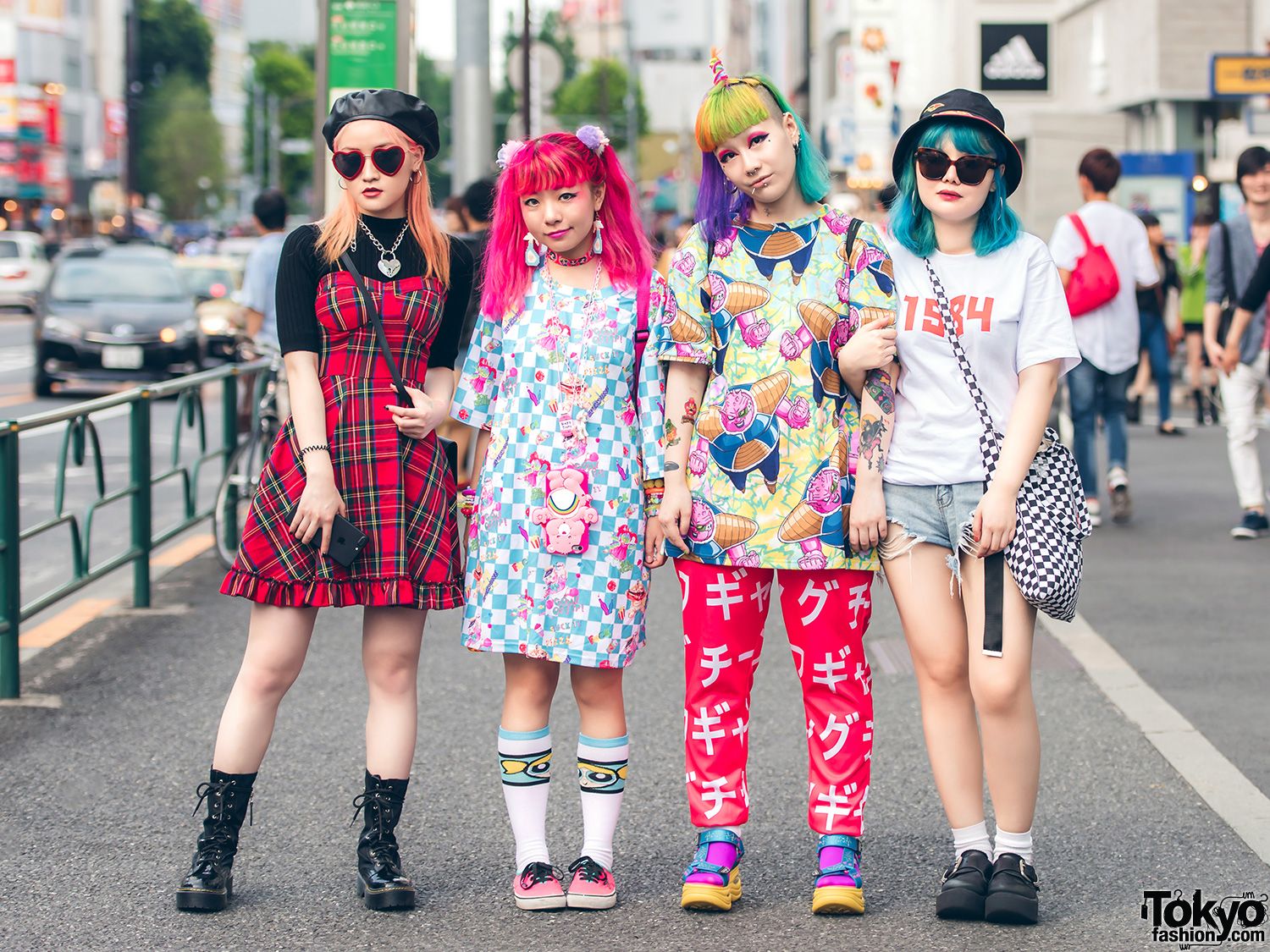
What Is Jirai Kei?
Jirai Kei (地雷系) translates literally as "landmine style." The name comes from the Japanese internet slang term jirai onna, meaning "landmine woman," a phrase used to describe someone who appears sweet and gentle on the surface but carries emotional intensity or unpredictability underneath. Think of someone who looks like a doll but feels everything at full volume.
What makes Jirai Kei different from other Japanese fashion subcultures is its commitment to that contradiction. This is a style built entirely on contrast: soft pink lace sitting next to gothic black, a doll-like silhouette paired with heavy platform boots, innocent ribbons worn alongside dramatic tear-streaked makeup. Nothing in a Jirai Kei outfit is an accident. Every piece is chosen to hold two things at once.
"Jirai Kei is not about being sad. It is about being allowed to be complex: to look sweet and feel everything."
According to Wikipedia's cultural overview of Japanese youth fashion, Jirai Kei gained widespread recognition in the late 2010s and accelerated through the early 2020s alongside the rise of social media and host club culture in Tokyo's Kabukicho and Shinjuku districts. It is now recognized globally as a distinct aesthetic within the broader world of East Asian street fashion.
The style sits within a family of aesthetics that includes acubi fashion, yami kawaii, dark girly kei, and ryosangata. But Jirai Kei has its own specific emotional register that separates it from all of them.
The History & Origins of Jirai Kei
Jirai Kei did not emerge from a fashion magazine or a single designer. It grew out of Tokyo's underground nightlife, shaped by the young women who spent their nights in Kabukicho and Shinjuku's host club districts, spaces where performance, vulnerability, and aesthetics were deeply intertwined.
A 2025 academic paper published on ResearchGate examining Jirai Kei's history across China and Japan traces the subculture's roots to the Toyoko Kids community, young people living around Shinjuku who mixed sweetness and pain into how they dressed. These were not trend-setters looking for attention. They were young people finding a visual language for feelings that had nowhere else to go.
The seeds in Kabukicho
Host club culture and Kabukicho nightlife begin shaping a distinct visual identity among young women in Shinjuku. Sweet aesthetics mixed with emotional darkness become a form of quiet communication.
Online communities take shape
Japanese internet forums and SNS platforms help Jirai Kei crystallize as a recognizable style. Idol fandom culture and the rise of visual kei influence the developing aesthetic.
The name sticks
The term "Jirai Kei" begins circulating widely on Japanese social media. According to the Japanese Fashion Wikia, the subculture's initial look closely mirrors dark girly fashion with its own emotional spin.
Pandemic resonance
Lockdowns and social isolation give the style new meaning globally. LARME magazine, a Japanese publication known for its retro and mature sweet styles, becomes one of the first mainstream outlets to feature it prominently.
Global expansion
TikTok and Instagram carry Jirai Kei to audiences in the US, UK, and Southeast Asia. The style splits into "fashion landmines" (focused on the aesthetic) and "lifestyle landmines" (who identify with the subculture's deeper themes).
The name itself was reclaimed. What began as a term used to mock emotionally complex women was taken up by those same women as armor. That act of reclamation is part of what gives Jirai Kei its staying power. It does not apologize for being difficult to understand.
The Jirai Kei Color Palette
The color language of Jirai Kei is precise. This is not a style that uses color randomly. According to fashion researchers at Dokodemo, Jirai Kei relies on low-saturation versions of its key colors, avoiding anything too bright or cheerful, which would undercut the emotional register the style is going for.
The three-color foundation of black, white, and muted pink creates visual tension that mirrors what the style is saying emotionally: innocence and something darker sharing the same space. Lavender and deep violet appear as accents, adding depth without breaking the palette's internal logic.
Red and crimson appear occasionally, usually in makeup rather than clothing, and they carry specific connotations within the aesthetic: the swollen-eye look, flushed cheeks, the appearance of crying. These choices are deliberate. The color is doing narrative work.
Key Jirai Kei Clothing Pieces
Building a Jirai Kei wardrobe means understanding which pieces carry the aesthetic and why. Every item below serves the contrast that defines the style. Mix too far toward the cute side and you lose the darkness. Go too gothic and you leave Jirai Kei behind entirely. The balance is the whole point.
Black Mini Skirt
Box pleat or A-line. The gothic anchor of most Jirai Kei outfits. Often layered over tights.
Lace Blouse
Peter Pan collar, frills, or ruffle trim. Usually white or pale pink. Creates the doll-like softness against black.
Oversized Cardigan
Black or dark grey. Often worn open over frilly pieces. Adds the feeling of something hidden or half-covered.
Platform Boots
Chunky-soled, usually black. The contrast between heavy footwear and delicate clothing above is core to the look.
Lace/Fishnet Tights
Worn under skirts. Lace for the softer variants, fishnet for the edgier. Both add texture.
Ribbon Choker
One of the most recognizable Jirai Kei accessories. Black or dark pink velvet. Often paired with heart or cross hardware.
Sanrio Accessories
Kuromi and My Melody feature heavily. They carry the kawaii element while the character designs already have built-in duality.
Pink Lace Dress
The softer, more romantic variant of the Jirai Kei silhouette. Works best layered under a dark cardigan or bolero.
Hair Bows & Ribbons
Large satin or velvet bows. Worn in twin tails or as a single statement piece. Immediately signals the aesthetic.
For international shoppers, platforms like Tokyo Fashion and Japan LA carry brands that ship globally. Secondhand markets in Japan's Shinjuku and Harajuku districts also stock a significant amount of Jirai Kei pieces at lower price points. The style does not require spending a lot. The balance of pieces matters more than individual item cost.
Jirai Kei Makeup & Hair
The makeup in Jirai Kei is as important as the clothing. Shoptery's J-fashion research guide notes that the technique draws from Chinese Douyin makeup and Korean puppy-eye trends, combining them into something distinctly Japanese. The goal is to look doll-like but also somehow fragile, like someone who might cry, or already has.
The signature looks
There are two primary makeup directions in Jirai Kei. The first is the namida bukuro look (tear bag makeup), which emphasizes the area under the eye to create the appearance of swollen, watery eyes. The second is the pien face, which uses red or pink eyeshadow placed below the eye to simulate the look of crying.
Porcelain base
Apply a pale foundation, slightly lighter than your natural skin tone. The goal is an ethereal, almost unwell quality. Set with a fine white powder to remove shine.
Droopy eye liner
Draw black liner along the upper lash line, then extend it slightly downward at the outer corner rather than upward. This downturned line is one of Jirai Kei's most distinctive features: it makes eyes look larger and more melancholic.
Under-eye blush
Apply pink or red eyeshadow softly beneath the lower lash line and into the inner corner. This is the defining step: it creates the teary, flushed look central to the aesthetic. Blend carefully so it looks natural rather than painted.
Emphasized tear bags
Use a light shimmery highlight or white pencil to draw attention to the natural pouch under the eye. This swollen look, namida bukuro, is a hallmark of the style.
Gradient lips
Apply a coral or pale pink lip color concentrated at the center, fading toward the edges. This creates a bitten-lip effect that reads as soft and slightly unwell rather than polished and composed.
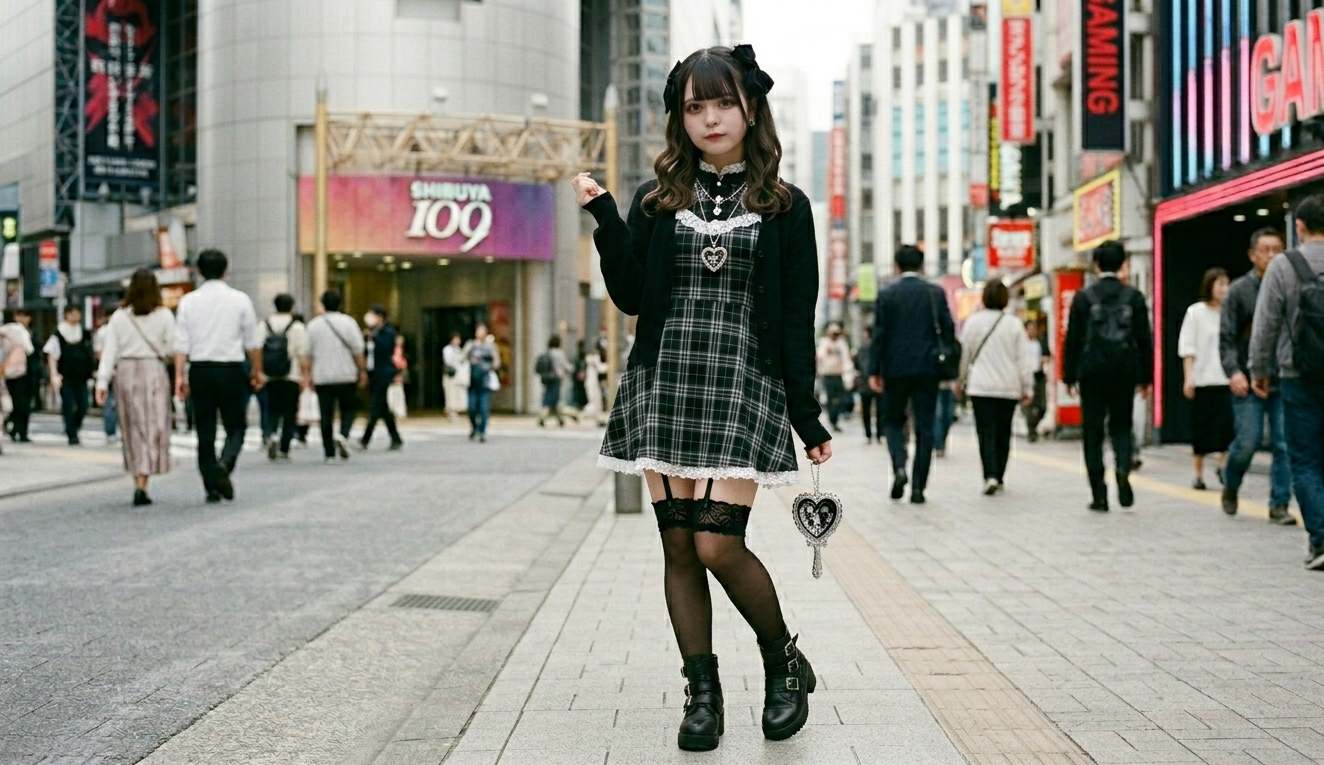
Hair
The twin tails hairstyle is the most associated with Jirai Kei: high pigtails that create a deliberately childlike, doll-like silhouette. Large ribbon bows are typically placed at each tie point. For those who prefer a single style, half-up half-down works well with a single bow or hair clip at the crown.
Hair color tends toward black or dark brown as a base, with clip-in pink or lavender extensions used to add contrast. Soft curls or straight styles both work, and the key is that the hair feels deliberate, not casual. This is not an effortless look, and it is not trying to be.
How to Build a Jirai Kei Outfit
Jirai Kei has several distinct variations depending on how far you lean toward the soft or dark end of the spectrum. Use the tabs below to explore three common outfit approaches.
The standard Jirai Kei formula: dark anchor pieces balanced by soft, doll-like details.
Leans toward the kawaii end. More pink, softer silhouette, but keeps the emotional Jirai Kei details in the makeup and accessories.
The darker, more alternative direction. Borrows from goth punk while keeping the Jirai Kei emotional core.
No matter which variant you choose, the Jirai Kei rule holds: keep at least one element that reads as soft and one that reads as dark. Remove either pole and you have moved into a different aesthetic entirely.
Jirai Kei vs. Related Styles
Jirai Kei sits within a cluster of aesthetics that share DNA but diverge in meaningful ways. Understanding where it sits helps clarify what makes it distinct, and helps you figure out which aesthetic actually fits your own sensibility.
The comparison between Jirai Kei and acubi fashion is worth dwelling on. Both originated in East Asian youth culture and both express something about emotional identity through clothing. But where acubi leans into clean restraint and the confidence of not-trying-too-hard, Jirai Kei leans into visible effort and emotional exposure. They are almost opposites in that sense, which is exactly why some fashion lovers wear both depending on their mood.
How Jirai Kei Went Global
The route from Kabukicho to TikTok took less than five years. Yokogao Magazine, one of the first mainstream publications to cover the style, documented how LARME magazine brought Jirai Kei into Japanese fashion media, and from there, social media did the rest.
By 2022, Jirai Kei transformation videos were gaining millions of views across TikTok and Instagram Reels. Creators in the US, UK, and Southeast Asia began building their own versions of the style, often softening its darker cultural associations while preserving the aesthetic contrast that made it visually distinctive.
This has created two streams within global Jirai Kei: those who engage with it primarily as a fashion aesthetic, and those who identify with the subculture's deeper emotional themes. The Japanese Fashion Wikia refers to these groups as "fashion landmines" and "lifestyle landmines" respectively, a distinction that has become increasingly important as the style has spread beyond Japan's original cultural context.
For those approaching Jirai Kei from outside Japan, the most important thing to understand is that the clothing does not require you to adopt the full cultural narrative. Many global wearers engage with it purely as a form of aesthetic self-expression, and that is a legitimate way to participate in the style. Fashion has always traveled this way.
The academic literature is beginning to catch up. The 2025 ResearchGate paper on Jirai Kei in China and Japan notes that commercialization has sparked debate within the community about whether the subculture's origins are being diluted, a familiar tension for any underground aesthetic that breaks into mainstream visibility.
Frequently Asked Questions
Jirai (地雷) means landmine in Japanese. Kei (系) means type or style. Together, "landmine style" refers to the original slang concept of someone who looks sweet on the surface but carries hidden emotional intensity, like a landmine that appears harmless until stepped on. The fashion subculture reclaimed this description as a form of pride.
They overlap but are not identical. Dark kawaii is a broader umbrella that includes yami kawaii, guro kawaii, and other styles that combine cuteness with darker imagery. Jirai Kei sits within that umbrella but has specific clothing, makeup, and cultural associations that distinguish it from yami kawaii and gothic lolita.
Yes. The style has spread internationally and is worn by people across North America, Europe, and Southeast Asia. Global wearers typically engage with it as a visual aesthetic rather than adopting the full subculture identity, which is a common and accepted way to participate in Japanese street fashion internationally.
They are almost opposite in feel. Acubi is a Korean aesthetic rooted in minimalism: clean lines, neutral colors, understated confidence. Jirai Kei is Japanese, maximalist in its emotional expression, and built on visible contrast between sweetness and darkness. Some people wear both depending on their mood.
Japanese retailers in Harajuku and Shinjuku carry significant Jirai Kei pieces, and many ship internationally. Online, platforms like Depop, Vinted, and Mercari Japan are useful for secondhand finds. Western alternative fashion brands have also begun producing pieces that work within the aesthetic without explicitly branding them as Jirai Kei.
Kuromi and My Melody are the two most closely associated with Jirai Kei. Both characters embody a version of duality. Kuromi's rebellious edge paired with My Melody's sweetness makes them natural symbols for a style built on contrast. Both appear frequently as bag charms, accessories, and embroidered details.