
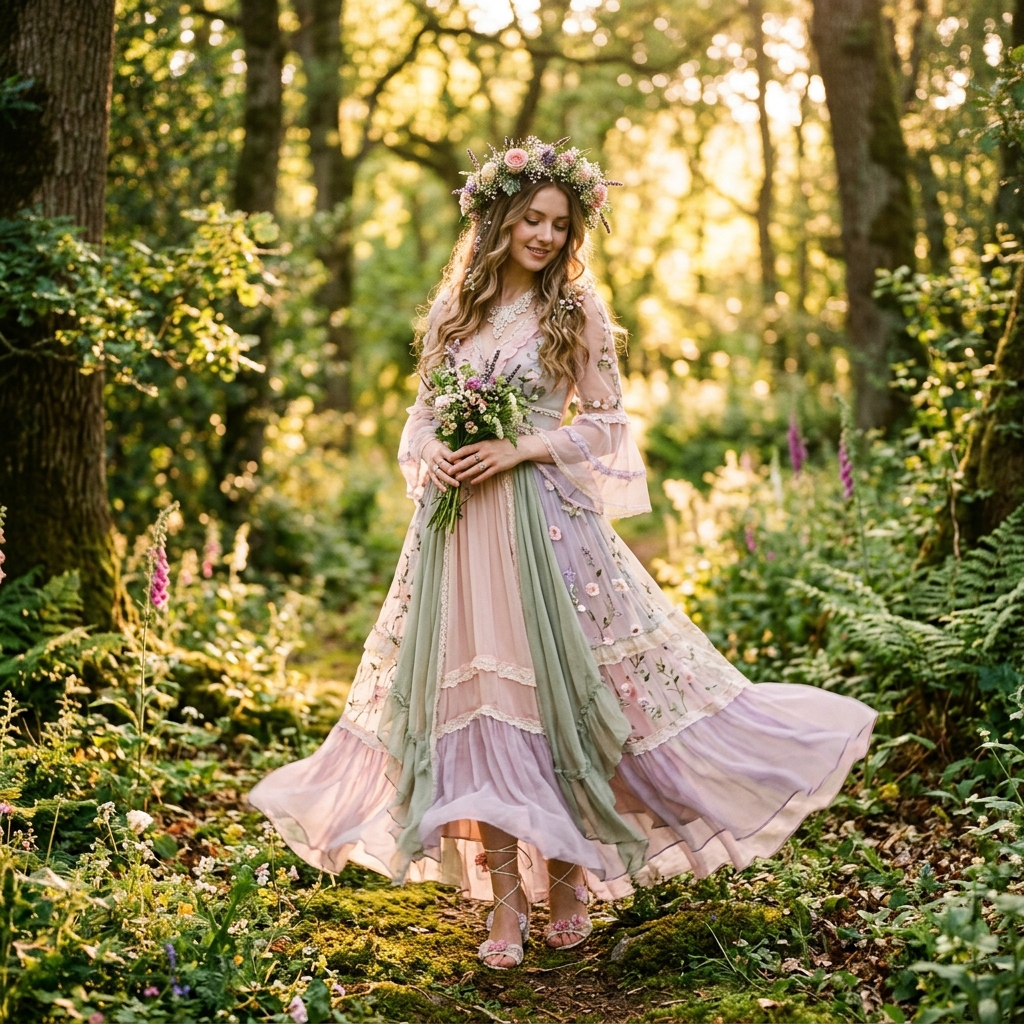
Picture a flowing dress brushing through tall grass, a flower crown slightly crooked, light catching on a moonstone ring. That image, equal parts storybook and street style, is fairycore, and it has quietly become one of the most resilient aesthetics to come out of the internet age. While other trends burn through their five minutes of relevance, fairycore has stuck around for half a decade by tapping into something older than social media itself: humanity's long-running obsession with fairies. This piece traces that obsession from 19th-century oil paintings to today's TikTok feeds, breaks down exactly what makes the look work, and shows you how to build it without raiding a costume shop. For the more restrained side of internet aesthetics, our Acubi Aesthetic and Cutecore guides are worth a look too.
What Is Fairycore?
Fairycore (sometimes called faecore) is an internet aesthetic that romanticizes fairy folklore and the natural world. It centers on soft, ethereal fashion, dreamy nature imagery, and a general mood of gentle enchantment. Unlike aesthetics built around boldness or irony, fairycore leans fully into softness and wonder.
It overlaps with cutecore in its embrace of pastel color and playfulness, but the two part ways in focus: cutecore is about cuteness and kawaii culture, while fairycore is specifically about magic, mythology, and the natural world. It is also frequently compared to cottagecore, a closely related but distinct aesthetic built around rural, pastoral life rather than fantasy.
Where Fairycore Actually Comes From
Fairycore did not appear out of nowhere. Its visual language has deep roots in Victorian fairy painting, a distinctly British genre that peaked in popularity during the 1840s. Artists of the era, including Richard Dadd and Sir Joseph Noel Paton, produced detailed, dreamlike depictions of fairies drawn from Shakespeare, folklore, and Romantic literature. Major exhibitions on the genre, including one organized by London's Royal Academy of Arts and shown at institutions like the Frick Collection, have documented how this style functioned as an escape from the realities of industrialization, much like fairycore today offers an escape from digital overstimulation.
The modern internet version of fairycore emerged in the late 2010s on Tumblr before spreading rapidly through TikTok and Pinterest in the early 2020s. It grew in tandem with cottagecore as part of a broader wave of nature-based, nostalgic aesthetics that resonated strongly with a generation seeking softness and escapism. Today, platforms like TikTok remain central to how the aesthetic spreads and evolves, consistent with broader research from the Pew Research Center showing that TikTok and Instagram have become the dominant platforms for young adults discovering and shaping aesthetic trends.

The Fairycore Color Palette
Fairycore runs on soft pastels layered against natural, earthy tones. The goal is a palette that feels like it was pulled straight from a forest at golden hour.
Unlike Y2K or acubi's deliberately muted neutrals, fairycore allows more color, just always softened, never saturated or harsh.
Signature Motifs and Elements
Flowy Fabrics
Chiffon, tulle, and lace dominate. Silhouettes are airy and move with the body rather than against it.
Nature Motifs
Mushrooms, butterflies, vines, and wildflowers show up across clothing, accessories, and prints.
Delicate Jewelry
Moonstone and crystal pieces, often in nature-inspired shapes like leaves or flowers.
Flower Crowns
One of the most recognizable fairycore staples, worn as a finishing touch on nearly any outfit.
Glowy Makeup
Shimmer, highlighter, and pastel eyeshadow create the "glowing from within" look the aesthetic is known for.
Corsets
Often in sage or white, layered over billowing tops for structure against the softness.
Fairycore vs. Other Aesthetics
How to Build a Fairycore Wardrobe
A long, airy dress or skirt in a soft pastel or cream tone is the anchor of most fairycore outfits. Look for chiffon, lightweight cotton, or lace blends that move freely.
A fitted corset, ideally in sage green or white, worn over a billowy top adds the structure that keeps the look from reading as costume rather than fashion.
Flower crowns, leaf-shaped earrings, and moonstone jewelry are the fastest way to signal fairycore without overhauling an entire outfit.
Ballet flats, lace-up boots, or Mary Janes finish the look. Avoid anything sharp-edged or heavily branded; the silhouette should stay soft throughout.
Dewy skin, soft pastel eyeshadow, and a touch of shimmer highlighter complete the look. For technique, our Acubi Makeup guide covers the dewy-base approach that pairs well here.
Looking for more internet aesthetics?
Want to compare fairycore against the more restrained side of internet aesthetics? Read our full breakdown of the Acubi Aesthetic, or see how it stacks up against other Acubi styles.
Frequently Asked Questions
Cottagecore is built around rustic, pastoral living, think gingham, baking, and rural simplicity. Fairycore shares the nature focus but centers specifically on fairy mythology, fantasy, and magic rather than rural life.
Its visual language traces back to Victorian fairy painting, a 19th-century British art genre. The modern internet aesthetic began on Tumblr in the late 2010s and grew rapidly on TikTok and Pinterest in the early 2020s.
Not necessarily. Many fairycore pieces, especially flowing dresses, lace tops, and nature-inspired jewelry, can be thrifted or found secondhand. The aesthetic favors handmade and vintage-feeling pieces over expensive new ones.
Dewy, glowing skin with soft pastel eyeshadow and shimmer highlighter. The goal is luminous rather than heavily made up, similar in spirit to the dewy base used in the Acubi makeup look.
Yes. Lighter chiffon and lace pieces work well in spring and summer, while layered cardigans, knit corsets, and richer earth tones adapt the look for colder months without losing the aesthetic's core identity.