
What Is Traditional Y2K Fashion?
Y2K fashion refers to the distinctive clothing styles that dominated the late 1990s and early 2000s, roughly from 1997 to 2005. According to Wikipedia's documented entry on the Y2K aesthetic, the name derives from the Year 2000 computer programming issue that created a cultural focal point of both anxiety and optimism about the new millennium. The term "Y2K aesthetic" was first systematically defined and popularized in 2016 by Evan Collins of the Consumer Aesthetics Research Institute (CARI).
The Fashion History Timeline, published by the Fashion Institute of Technology (FIT), State University of New York, documents what defined the era in precise detail. At the turn of the millennium, fashion looked to the future as technology saw rapid development leading toward smartphones and social media. The emphasis on new technology inspired fashion with metallic silvers, blacks, and the use of straps and belts to create a Matrix-influenced look. The catwalks in Spring and Fall 2001 were dominated by black, with Balenciaga, Yves Saint Laurent Rive Gauche, and Calvin Klein using it almost exclusively.
After the events of September 11, 2001 and the mortgage crisis, American fashion turned toward conservatism, and low-rise denim became the defining garment of the decade. Celebrity culture drove consumer choices at unprecedented scale. As the FIT Fashion History Timeline documents, designer brand collaborations with high-street retailers began in this period: H&M's November 2004 collaboration with Karl Lagerfeld sold out in some stores in under 20 minutes, a moment that fundamentally changed how fashion spread to mass consumers.
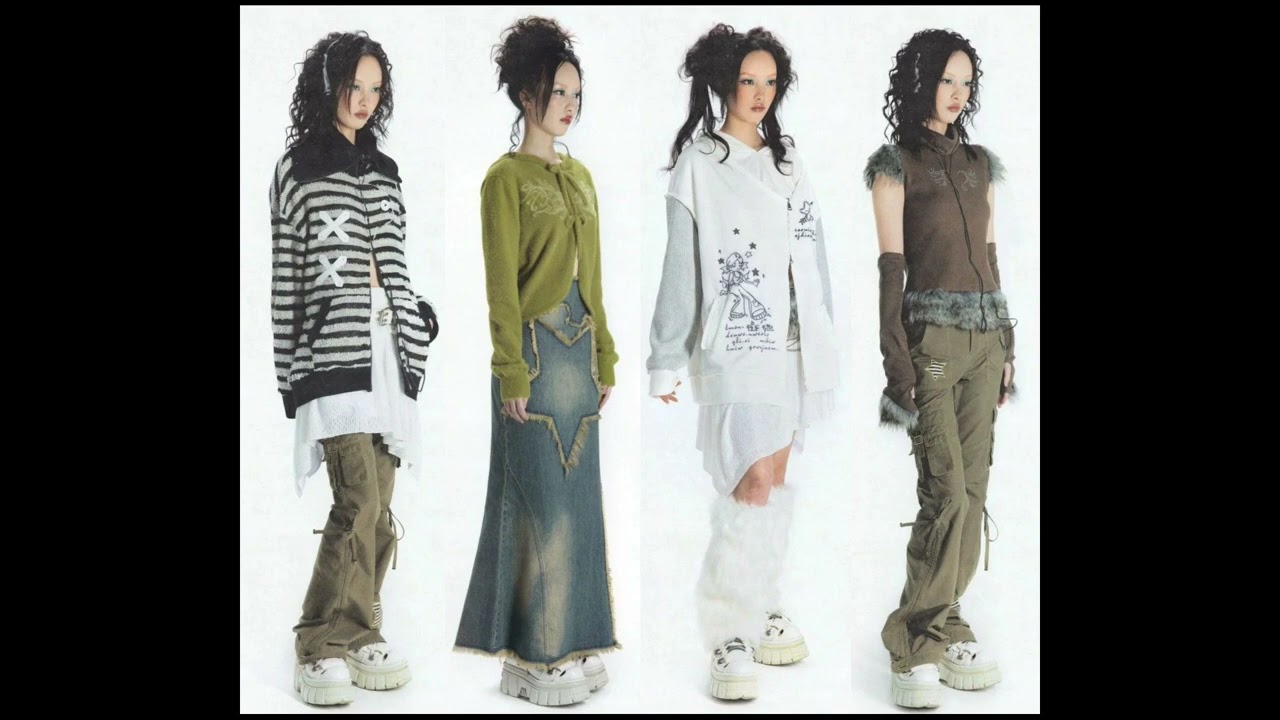
The Y2K aesthetic included: metallic and synthetic fabrics, low-rise jeans, tiny handbags, logo-covered tracksuits (Juicy Couture), Von Dutch trucker hats, platform shoes, bared midriffs, and bold colors. As Wikipedia's documented overview of 2000s fashion notes, "Y2K clothing was mostly made in black, though silver was also fashionable especially in the UK," including metallic patterns for going out, leather coats, and chunky dress shoes in futuristic colors.
"Fashion is cyclical. No era is immune to a remix now and again."
Vogue, as cited in academic analysis of the Y2K revivalWhat Is Acubi Fashion?
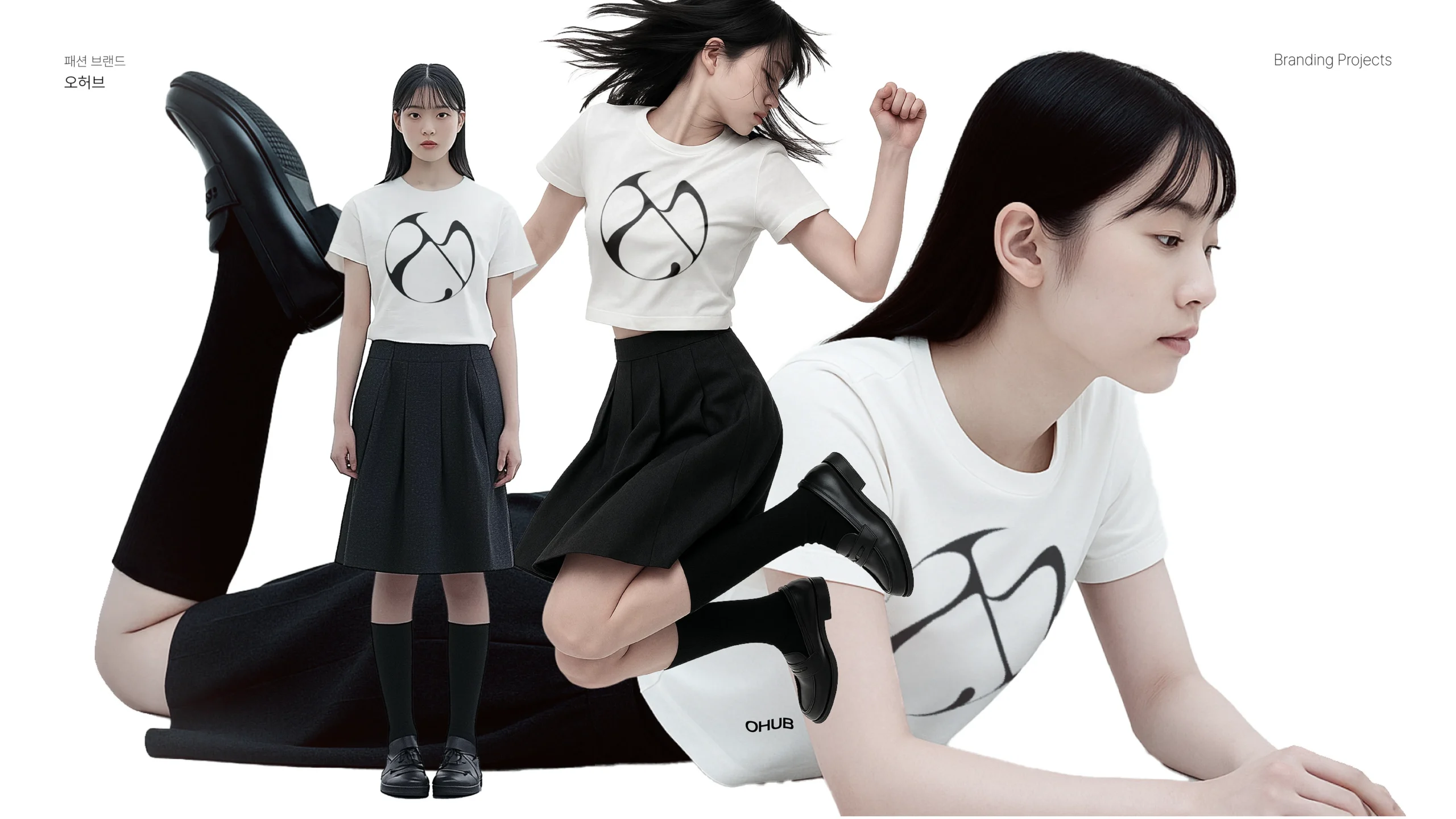
Acubi fashion is a Korean minimalist aesthetic that emerged from Seoul's street fashion scene in the early 2020s. The name connects to the Korean Instagram account @acubi.co, which first popularized this understated look. It draws from Y2K's era reference but applies Korean fashion's core design principles: proportional layering, tonal discipline, and a quiet confidence that avoids the loudness that defines original Y2K.
Where traditional Y2K maximizes visible effort through accessories, logos, and bold contrast, acubi applies the same early 2000s silhouettes and garment shapes but strips them back to their structural essence. A baby tee is still present, but in cream, not neon. Wide-leg trousers are still there, but in beige, not print. The Mary Jane shoe still references the era, but without rhinestones or platform excess.
Acubi is best understood not as a rejection of Y2K but as its Korean translation. Seoul's fashion culture looked at Y2K's DNA and asked: what are the structural elements underneath all the noise? The answer became the acubi aesthetic: the layering, the silhouettes, and the era reference, with the maximalism filtered out entirely.
Side-by-Side Comparison
The Y2K Revival: What the Research Shows
Traditional Y2K fashion's return as a global trend in the early 2020s was not random. It followed a well-documented pattern in fashion history: the approximately 20-year nostalgia cycle in which a generation rediscovers the fashion of its childhood. Wikipedia notes that the Y2K aesthetic term gained mainstream cultural usage primarily in the 2020s as TikTok and Instagram users began popularizing nostalgic early 2000s fashion.
Consumer Nostalgia by Fashion Decade (% favorability rank)
Relative rating percentages. Source: CivicScience Consumer Data
Academic research has documented the Y2K revival in formal terms. A 2022 paper published on ResearchGate, "Retro Futurism: The Resurgence of Y2K Style in the Fashion Field," identifies 1999 and 2000 as the peak of Y2K style, noting it "can not only be seen in fashion shows, films and television works, but also in many European and international street style contexts." The paper notes that K-pop idols and celebrities contributed directly to the resurgence by reintegrating Y2K aesthetic elements into contemporary clothing design.
According to CivicScience consumer data, 43% of U.S. adults say nostalgia is a factor when shopping for clothing, a figure that grew three percentage points in a single year. The American Psychological Association has documented nostalgia's role as a psychological coping mechanism during periods of uncertainty, which explains why Y2K fashion's revival accelerated during and after the pandemic period of 2020 to 2022.
How Y2K Became Acubi: The Transformation
The visual progression of turn-of-the-century styles evolving into contemporary Korean minimalist street outfits follows a structured progression.
Original Y2K Millennium Optimism
Fashion mirrors the computer age anxiety and tech optimism. Low-rise jeans, metallic fabrics, Von Dutch hats, and Juicy tracksuits dominate global runways, heavily driven by early digital celebrity culture as documented by the FIT Fashion History Timeline.
Y2K Fades, Seoul Streets Absorb It
Western fashion pivots to heavy normcore minimalism. However, local Seoul street markets in Hongdae and Sinchon absorb Y2K silhouettes, filtering out flashy colors to establish early proportional layers and muted neutral palettes.
Y2K Named, K-Beauty Minimalizes
Evan Collins of the Consumer Aesthetics Research Institute formally defines "Y2K Aesthetic" in 2016, as noted in Wikipedia. Concurrently, K-pop global growth spreads desaturated streetwear basics to international followers.
TikTok & Douyin Propel Resurgence
Collective uncertainty drives massive Gen Z nostalgia purchases. The #Y2K hashtag clears 60B views on TikTok. Minimalist styling pages in Korea and China popularize underwired baby tees and baggy cargos as "Acubi" sets.
Acubi Solidifies the Global Canon
Acubi becomes a standard cataloged search aesthetic. K-pop groups like NewJeans base visual concepts around Korean street-preppy minimalist hybrids. Traditional Y2K elements are fully integrated into selective, clean capsule outfits.
Where Acubi and Y2K Actually Overlap
Despite their opposing philosophies, acubi and Y2K share genuine structural DNA. Understanding where they overlap helps clarify why the two are so frequently confused and why acubi is best understood as a Korean translation of Y2K rather than an entirely different aesthetic.
Trouser Shapes
Both aesthetics rely heavily on low-slung, wide-leg, or straight-hem baggy pant panels to define the lower half.
Baby Tees
Fitted, short-bodied crop tops and underwired ribbed baby tees form the upper base layer across both looks.
Strap Flats
Mary Jane shoes, especially platform variants, represent crucial footwear markers across both visual histories.
Core DNA: What Defines Each Style
Frequently Asked Questions
The fundamental difference is philosophy. Traditional Y2K is maximalist: bold colors, visible logos, metallic fabrics, and more accessories than necessary. Acubi is minimalist: muted neutrals, no branding, natural fabrics, and deliberate restraint. Both reference the same era (late 1990s and early 2000s) through similar silhouettes and garment shapes, but acubi filters out all of Y2K's loudness and applies Korean street fashion's tonal and proportional discipline to what remains.
That is a useful shorthand but not the complete picture. Acubi is what Korean street fashion did with Y2K's structural vocabulary after running it through its own design principles. The silhouettes (wide-leg trousers, baby tees, layering) survive. The era references (Mary Janes, small bags) survive. But the color system, the branding logic, the fabric choices, and the accessory philosophy are completely replaced by Korean fashion's minimalist framework. It is not just "quieter Y2K." It is Y2K reimagined by a different fashion culture with different values.
The Y2K revival follows the well-documented 20-year fashion nostalgia cycle. According to CivicScience consumer data, 43% of U.S. adults factor nostalgia into clothing purchases and 26% rank the early 2000s as their favorite fashion decade. A 2024 Pew Research study found 70% of Gen Z engage with nostalgia-driven content daily. TikTok's #Y2K hashtag has accumulated over 60 billion views. The revival also reflects a broader psychological pattern: as documented by the American Psychological Association, nostalgia functions as a coping mechanism during periods of collective uncertainty.
With care, yes, but it requires choosing which aesthetic's rules to follow and using the other only for specific elements. The safest approach is to use acubi as the base framework (neutral palette, relaxed silhouette, minimal accessories) and borrow only Y2K's structural garment shapes without its color, branding, or maximalist accessories. Wide-leg trousers from the Y2K shape vocabulary worn in a muted beige with an oversized knit and clean loafers is effectively how acubi already works. Crossing into actual Y2K territory (metallics, bright colors, visible logos) breaks the acubi palette immediately and creates a conflict between the two systems.
According to the Fashion History Timeline published by the Fashion Institute of Technology (FIT), State University of New York, Y2K fashion emerged from the cultural moment of the new millennium, shaped by technology's rapid development, MTV's dominance, and celebrity-driven consumer culture. The emphasis on new technology inspired metallic silvers and futuristic aesthetics. After September 11, 2001, American fashion turned conservative, but the more expressive elements of Y2K continued elsewhere. The FIT Timeline identifies the decade as fundamentally shaped by the intersection of celebrity culture and rapidly spreading internet technology.
Traditional Y2K is most associated with Juicy Couture (velour tracksuits), Von Dutch (trucker hats), Ed Hardy (graphic logo tees), True Religion (denim), and Versace (metallic and bold print pieces). These brands are defined by visible branding and bold aesthetic statements. Acubi avoids all branded association. The closest brand references for acubi are Korean labels like Matin Kim and Sappun for footwear, and accessible brands like COS, Uniqlo, and Mango for basics, all chosen because they carry minimal visible branding and clean neutral designs.