

What Is Jirai Danshi?
Jirai Danshi (地雷男子), literally "landmine boy," is the male counterpart to Jirai Kei, the Japanese subculture that pairs a delicate, doll-like surface with a darker emotional undertone[1]. Where the feminine version leans into lace, bows, and Sanrio accessories, Jirai Danshi trades those for oversized shirts, baggy trousers, and layered jackets in the same signature color story, sometimes described as a "subcul Jirai" offshoot within the broader Jirai Kei umbrella[2].
The style isn't just Jirai Kei with the skirts swapped out for pants. It draws its own separate lineage from visual kei and menhera fashion, two earlier Japanese subcultures that gave men cultural permission to dress with emotional openness rather than conventional masculine restraint[3].
Where the Term Comes From
The word "jirai" (地雷) means landmine, and it originated as internet slang describing someone who seems gentle on the surface but is emotionally unpredictable underneath, a term Wikipedia traces to anonymous Japanese forums before it evolved into the fashion label used today[4]. The subculture crossed into mainstream visibility during a March 2020 "psycho girlfriend" styling challenge that went viral on Japanese social media during COVID-19 restrictions[5].
As the style expanded beyond its original niche, Jirai Danshi emerged as the recognized menswear branch, adopting the same emotional framing while developing its own distinct silhouette.
This guide treats Jirai Danshi purely as a clothing and color aesthetic. The term's cultural background involves sensitive associations that fall outside what a fashion styling guide should cover in depth.
Timeline: From Kabukicho to Global TikTok
Visual kei sets the template
Dark, theatrical menswear from Japan's visual kei music scene blurs gender lines and normalizes emotion-driven dressing for men[3].
Menhera style circulates
A parallel aesthetic built around visible emotional vulnerability spreads through Japanese youth internet culture, feeding directly into the visual language.
Jirai Kei goes viral
A styling challenge during Japan's COVID-19 restrictions pushes the aesthetic from niche Kabukicho nightlife into mainstream youth fashion[5].
Jirai Danshi is named
As Jirai Kei expands, its menswear expression is recognized and named separately, distinct from the frillier "main" feminine style[2].
Global spread
Anime, idol culture, and TikTok carry Jirai Danshi styling beyond Japan, with Western audiences discovering it alongside Jirai Kei.
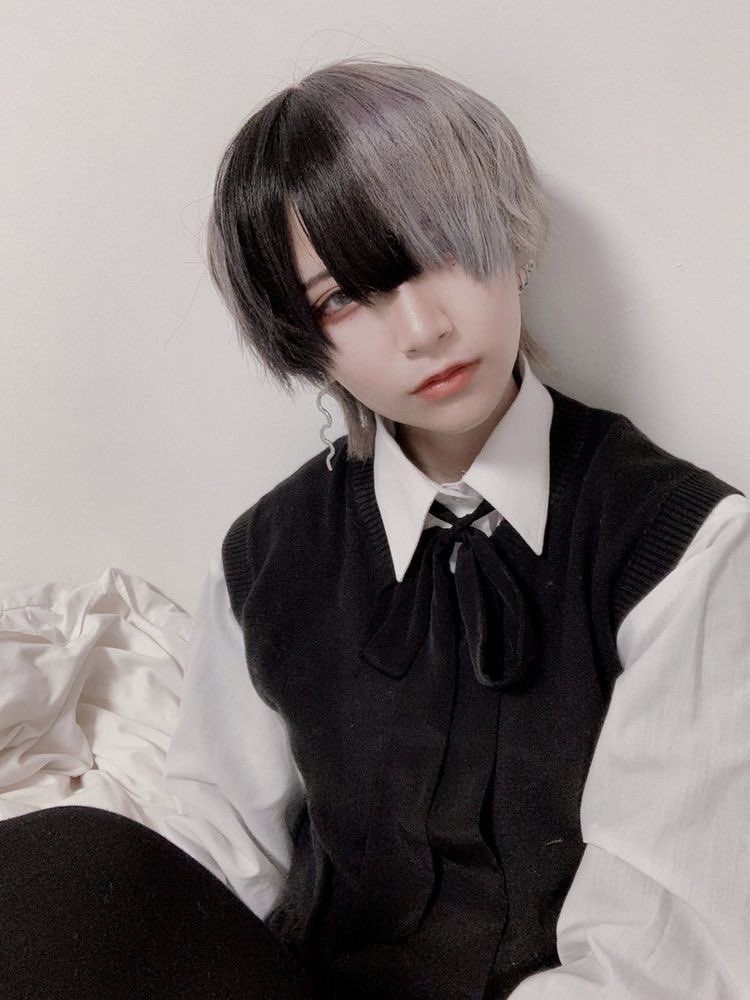
The Color Palette
Jirai Danshi stays inside the same melancholic color family as Jirai Kei, but leans darker and more desaturated, dropping most of the pink in favor of black, gray, and muted accent tones.
Key Wardrobe Pieces
Oversized Shirts
Loose black or white button-ups, often worn slightly undone, form the base layer.
Baggy Trousers
Wide-leg or cargo-style bottoms in black or charcoal, echoing the subcul Jirai silhouette.
Layered Jackets
Structured outerwear worn over the base shirt, adding the silhouette weight.
Chokers & Chains
Minimal jewelry, kept understated compared to the feminine style's heavier accessory load.
Arm/Leg Warmers
A recurring subcul Jirai detail that softens the otherwise structured, oversized shapes.
Platform Boots
Chunky-soled boots anchor the look, shared visual language with the feminine Jirai Kei shoe silhouette.
Jirai Danshi Style DNA
Editorial Style Spectrum
A qualitative read of where Jirai Danshi sits stylistically, not a statistical measurement
Jirai Danshi vs Jirai Kei
Frequently Asked Questions
Jirai Danshi (地雷男子) translates to "landmine boy," the male counterpart to Jirai Kei fashion, describing men who dress within the same dark, emotionally expressive aesthetic as the better-known feminine style.
No, they're related but distinct. Jirai Kei is the broader subculture and its default feminine expression; Jirai Danshi is the specific menswear branch, closer to "subcul Jirai" styling with oversized shirts and layered jackets rather than lace and skirts.
Oversized black or white shirts, baggy trousers, layered jackets, thin chokers or chains, arm warmers, and platform boots, all kept within a black, charcoal, and muted-accent color palette.
Its roots trace back further than Jirai Kei itself, drawing on early-2000s visual kei's theatrical menswear and 2010s menhera style, before being formally named as a Jirai Kei offshoot in the early-to-mid 2020s.