Korean Body Scrub: The Complete Guide to At-Home Exfoliation
Disclosure: This page contains affiliate links. As an Amazon Associate, Acubi earns from qualifying purchases at no extra cost to you. Read our full disclosure.
K-Beauty Skincare
Korean Body Scrub: The Complete Guide to At-Home Exfoliation
A century of bathhouse ritual, translated into products you can use in your own shower. This guide covers the science, the method, the ingredients, and the tools that actually work.
A Korean body scrub is a physical exfoliation method rooted in jjimjilbang culture, the tradition of communal bathhouses that have existed in Korea since at least the Joseon dynasty. In these bathhouses, trained attendants called ttae milgi practitioners use a specialized viscose cloth mitt to scrub away layers of dead skin from a soaked body. The results are visible and immediate: grey rolls of dead cells lift away, leaving skin that is measurably smoother to the touch.
What separates this from a typical Western body scrub is the mechanism. Most Western scrubs rely on abrasive granules, sea salt, or sugar suspended in a cream. Korean exfoliation uses a viscose or rayon cloth called an Italy towel (이태리타월), which grips the surface layer of dead corneocytes and rolls them away through friction. No granules, no microplastics, no residue left in the shower.
The modern iteration has expanded far beyond the mitt. Chemical peeling sprays, rice water ampoules, and AHA/BHA body serums now replicate the cellular renewal that jjimjilbang attendants achieved through pressure and time, but in formats that work between shower sessions and on the face as well as the body.
This guide covers how to read the ingredients, how to match the format to your skin condition, and which products are currently delivering results for people buying through Amazon.
12K
Monthly US searches for "korean body scrub"
28
Days for the skin to complete one full cell turnover cycle1
$16B
Global K-beauty market value in 2024
1960s
When the Italy towel was first developed and manufactured in Korea
Your skin is continuously generating new cells at the base of the epidermis. Those cells migrate upward over approximately 28 days, gradually flattening and hardening as they fill with a protein called keratin. By the time they reach the outermost layer, the stratum corneum, they are fully dead corneocytes: flat, keratin-filled cells held loosely together by lipid bridges.1
In ideal conditions, these cells shed naturally. In practice, factors including low humidity, reduced skin hydration, slow metabolism, and simply not bathing long enough prevent the full shedding cycle from completing. The result is a visible buildup that makes skin appear dull, grey, or rough, particularly on high-friction areas like the elbows, knees, and upper arms.
The Italy towel mitt removes this layer through a process called mechanical desquamation: physical friction that breaks the lipid bonds holding dead cells together, allowing them to roll away from the skin's surface. The viscose material is specifically effective because its texture provides just enough grip to dislodge the dead layer without cutting into the living epidermis below.2
Chemical exfoliants, including AHA (alpha hydroxy acid), BHA (beta hydroxy acid), and PHA (polyhydroxy acid), work through a different mechanism: they dissolve the intercellular glue holding the stratum corneum together, causing cells to shed more evenly over time rather than in a single physical session.
Skin cell turnover cycle by age
The average days for a complete skin cell turnover cycle increases with age, meaning dead skin accumulates faster as we get older.1
Physical vs. chemical exfoliation: what each method targets
Effectiveness scores are relative and depend on consistent use. Physical and chemical methods address different layers of the exfoliation problem.
Key research note
According to research published by the National Institutes of Health, the stratum corneum is 15 to 20 cell layers thick and is completely replaced approximately every two to three weeks in young adults. This cycle slows progressively with age, making regular exfoliation increasingly important for maintaining skin texture and tone over time.
The Method
How to Do a Korean Body Scrub at Home
The technique is as important as the tool. The single most common reason people report disappointing results is skipping or rushing the soak step. Follow this process exactly and the difference is immediate and visible.
1
Soak for at least 15 minutes in warm water
This is not optional. The dead cell layer must be fully softened before it will roll away. A quick shower rinse does not produce enough hydration or heat exposure to loosen the stratum corneum. Run a warm bath or keep the shower running directly on each body area for a full 15 minutes. If you cannot commit to 15 minutes, a 10-minute hot shower with the stream focused on your skin is the minimum.
2
Remove all soap and product from skin before scrubbing
Soap residue creates a slippery barrier between the mitt and your skin. If you have already applied body wash, rinse thoroughly until your skin feels clean but not slippery or smooth. The mitt needs direct contact with dry-within-wet skin to lift dead cells. This is different from how most Western shower routines work, and it requires resetting the sequence.
3
Scrub in long, firm, unidirectional strokes
Start at your wrists and move toward the shoulder. On the legs, start at the ankle and move toward the thigh. Long strokes in one direction are more effective than circular motions for rolling dead cells. Apply firm but not painful pressure. Within the first two or three strokes on an area that has not been exfoliated recently, you should see grey rolls beginning to appear. If nothing appears after five strokes, the soak was not long enough.
4
Work through the full body systematically
Arms, shoulders, chest, abdomen, back (use the long flat cloth format for better reach), thighs, calves, and feet. Pay extra attention to keratosis pilaris areas on the upper outer arms and the backs of thighs. Avoid the face, neck, and any areas with active irritation, broken skin, or rash.
5
Rinse fully with warm water
Rinse away all the rolled dead skin. A final cool rinse helps close pores slightly and leaves skin feeling tighter and smoother. Do not apply soap at this stage unless the session has left product residue on your skin.
6
Moisturize immediately while skin is still slightly damp
This is the highest-value moment for moisturizer application in your entire skincare routine. Your skin barrier has just been disrupted and is absorbing products more readily than at any other point. Apply a rich body lotion or oil within two minutes of stepping out of the shower. The improvement in moisturizer effectiveness after a scrub session is significant and observable the same day.
7
Wait at least one full week before scrubbing again
Over-exfoliation is the most common mistake. Once per week is the standard maximum for normal skin. Sensitive skin should start at once every two weeks. Signs of over-exfoliation include persistent tightness, new sensitivity to products that previously caused no reaction, redness, or a shiny, raw appearance to the skin surface. If you see these signs, extend the interval and focus on barrier repair with ceramide-heavy moisturizers.
Frequency guide at a glance
Normal to oily skin: once per week. Dry skin: once every 10 to 14 days. Sensitive skin: once every two weeks to start. Chemical spray exfoliants: two to three times per week. Daily peeling ampoule: every day or every other day depending on skin response.
Skin Type Guide
Which Korean Scrub Format Works for Your Skin
The three main Korean body scrub formats work through different mechanisms and suit different skin conditions. Choosing the wrong format is the primary reason people do not see results, or see results and then experience irritation.
💧
Dry or flaky skin
Italy towel mitt
The physical mitt lifts dry patches and reveals the smoother skin underneath in a single session. Follow immediately with heavy moisturizer to prevent rebound dryness.
✨
Dull or uneven tone
Chemical peeling spray
AHA acids and kojic acid dissolve dead cells and target hyperpigmentation over repeated use. Results build over two to four weeks of consistent application.
🔬
KP bumps (upper arms)
Mitt plus BHA spray
Keratosis pilaris responds best to a combination approach: weekly physical exfoliation plus a BHA-containing spray on affected areas between sessions. Consistency over weeks is required.
🌿
Sensitive or reactive skin
Rice peeling ampoule
A gentle rice water ampoule delivers chemical exfoliation without friction. Significantly lower risk of irritation compared to both physical mitts and stronger acid sprays.
☀️
Post-tan or sun-damaged
Kojic acid spray
Kojic acid combined with AHA addresses post-sun hyperpigmentation and uneven tone. Wait at least 48 hours after sun exposure before applying any exfoliant.
🧖
Normal skin, routine focus
Italy towel mitt
The mitt is the most satisfying and efficient option for people without specific skin concerns. A single weekly session maintains smooth, even texture year-round.
Format comparison
Format
Mechanism
Immediate results
Face safe
Sensitive skin
Frequency
Italy towel mitt
Physical friction
Yes
No
Avoid
Once per week
AHA/Kojic acid spray
Chemical exfoliant
No
Some formulas
Use with caution
2 to 3x per week
Rice peeling ampoule
Gentle chemical
No
Yes
Yes
Daily use
Ingredient Guide
Key Ingredients in Korean Body Scrub Products
Korean chemical exfoliants are formulated around a specific set of active ingredients. Understanding what each one does helps you select the right product for your concern and avoid combining actives that may irritate when used together.
AHA (Alpha Hydroxy Acid)
Chemical exfoliant
Water-soluble acids, including glycolic and lactic acid, that dissolve the protein bonds holding dead skin cells together. Best for surface texture, dullness, and sun-damaged skin. Work on the outermost layers only.
BHA (Beta Hydroxy Acid)
Chemical exfoliant
Oil-soluble, primarily salicylic acid. Penetrates into pores and sebaceous follicles, making it uniquely effective for keratosis pilaris and body acne. Works at a deeper level than AHA.
PHA (Polyhydroxy Acid)
Gentle chemical exfoliant
A newer generation of exfoliant acid with a larger molecule size than AHA. Exfoliates more slowly and gently, with added humectant properties. The best choice for sensitive skin that cannot tolerate AHA.
Kojic Acid
Brightening agent
Derived from fungi during sake fermentation. Inhibits tyrosinase, the enzyme responsible for melanin production. Addresses post-inflammatory hyperpigmentation and uneven body tone over consistent use of four to eight weeks.
Niacinamide
Brightening and barrier agent
A form of vitamin B3. Reduces the transfer of melanin to skin cells, supports the ceramide-based skin barrier, and reduces pore appearance. Pairs well with both AHA and kojic acid without increasing sensitivity.
Rice Bran Water
Korean skin classic
Rich in ferulic acid, vitamins B and E, and ceramide precursors. Used as a base in Japanese and Korean skincare for centuries. Provides hydration and antioxidant protection while supporting barrier recovery after exfoliation.
Turmeric Extract
Anti-inflammatory
Contains curcumin, a natural anti-inflammatory and mild skin brightener. In exfoliant formulas, turmeric helps calm any reactive redness that AHA or kojic acid may trigger, particularly in people with reactive skin types.
Viscose Rayon
Italy towel material
A semi-synthetic cellulose fiber used in the original Italy towel mitts. When wet, the fibers soften slightly while retaining enough surface texture to grip and roll dead corneocytes. 100% viscose rayon is the authentic material. Avoid mitts that contain synthetic polyester, which can be too abrasive.
Combining actives safely
Do not use a physical mitt and a chemical spray exfoliant on the same day. Both disrupt the skin barrier, and combining them in a single session increases the risk of over-exfoliation. If using a chemical spray two to three times per week, keep mitt sessions to once every 10 days on the same areas. Retinol and exfoliant acids should also not be used on the same day.
Product Finder
Find the Right Korean Body Scrub for You
Answer three quick questions to get a specific product recommendation from the list below.
Which product suits you?
Three questions. One clear recommendation.
Recommended Products
Korean Body Scrub Products Worth Buying
Selected based on Amazon bestseller data, ingredient quality, and verified customer feedback. All affiliate links are marked.
Most Popular
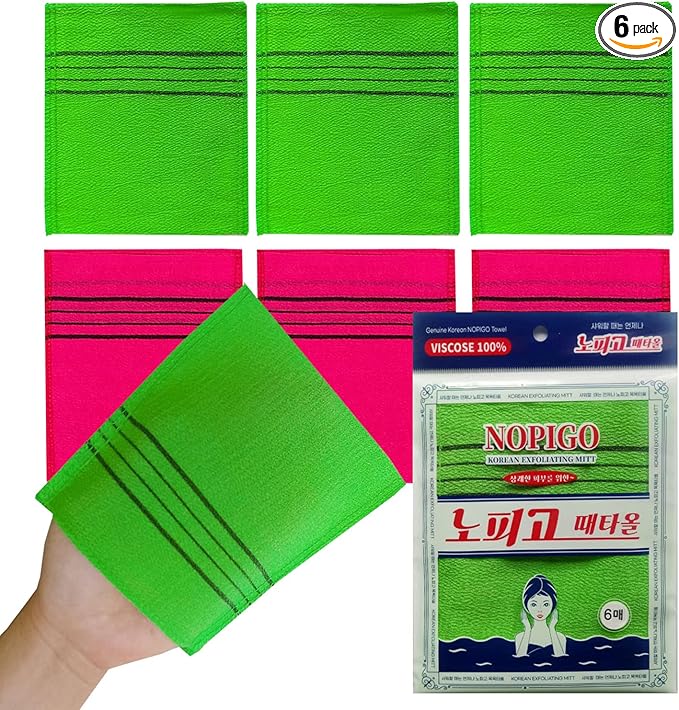
NOPIGO Original Korean Exfoliating Mitt
The Italy towel mitt that introduced most Western buyers to Korean body scrubbing. Made from 100% viscose rayon, these mitts grip dead skin cells and roll them away with a level of efficiency no granule-based scrub comes close to matching. The pack includes green mitts for the body and red mitts for slightly more tender areas. The mitt works on warm water alone, with no soap or product required. This is the closest at-home equivalent to what a jjimjilbang attendant uses, and it delivers the same visible result: visible grey rolls of dead skin within the first two or three strokes on a properly soaked body.
Material: 100% Viscose RayonPack size: 6 mitts (4 Green, 2 Red)Use: Weekly (Body only)Origin: Manufactured in Korea
Best for: Normal, dry, or oily body skin experiencing general rough texture or flakiness. The essential tool for authentic bathhouse exfoliation. Not for face or highly sensitive skin.
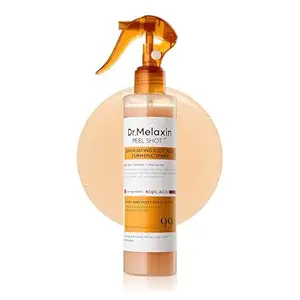
Dr.Melaxin Kojic Acid and Turmeric Body Peeling Spray
A targeted chemical peeling spray designed for body hyperpigmentation, uneven skin tone, sun spots, and keratosis pilaris. The formula uses AHA (glycolic acid) to address surface texture, BHA (salicylic acid) to penetrate pores and clear keratin buildup, and kojic acid and turmeric to address melanin production. The spray format makes it easy to apply to hard-to-reach areas like the back and thighs. Unlike physical mitts, it does not require a 15-minute soak to work: you spray it on dry or damp skin, massage for one minute until dead skin begins to clump, and rinse.
Key actives: Kojic Acid, Turmeric, AHA, BHA, NiacinamideSize: 6.76 fl.oz (200ml)Target: Dark spots, KP bumps, body acneUse: 2 to 3 times per week
Best for: Keratosis pilaris bumps on the arms and thighs, post-acne dark marks on the back, and general uneven tone from sun exposure. Excellent non-friction alternative to physical scrubs.
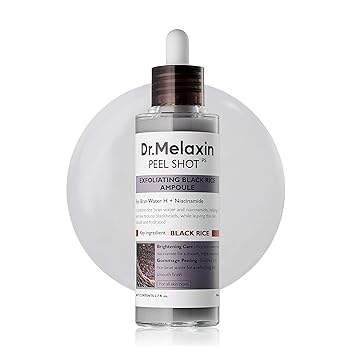
Dr.Melaxin Peel Shot Glow Black Rice Peeling Ampoule
The gentlest format on this list and the only one safe for daily use on both the face and body. The triple-exfoliant formula uses AHA, BHA, and PHA together at low concentrations, alongside black rice water extract, niacinamide, and hyaluronic acid. The rice bran water base delivers concentrated hydration alongside the exfoliation, which prevents the dryness and tightness that stronger acid formulas often cause. Because this is a daily-use product, results are cumulative: four weeks of consistent use produces measurable improvement in texture, pore appearance, and overall skin tone.
Key actives: AHA, BHA, PHA, Black Rice Water, NiacinamideSize: 2.71 fl.oz (80ml)Skin type: All, including sensitiveFrequency: Daily
Best for: Sensitive skin that reacts to physical scrubbing, anyone wanting a single exfoliant that works safely on both the face and body, and people building a daily Korean skincare routine who want exfoliation without a dedicated scrub session.
The grey rolls that appear during scrubbing are clusters of desquamated corneocytes: dead cells from the stratum corneum that have been loosened by warm water and lifted by friction. These cells shed naturally, but in the absence of prolonged water exposure they often stay partially attached rather than falling away cleanly. According to the National Institutes of Health, the stratum corneum is 15 to 20 cells thick and is replaced approximately every 14 to 28 days. The volume of dead skin that rolls off in a single session reflects how long the accumulation has been building, not how unhygienic the person is.
Physical mitt scrubbing is not recommended for skin with active eczema, psoriasis, rosacea, or any inflamed condition on the body. Sensitive skin types without an active condition can attempt mitt scrubbing once every two weeks with light pressure, but the chemical ampoule option is a safer starting point with a much lower risk of irritation. Always patch-test on the inner arm and wait 24 hours before full application of any new exfoliant product.
No. Italy towel mitts are body-only tools. Facial skin is significantly thinner than body skin and the friction required to dislodge body-level dead skin accumulation will cause micro-tears, inflammation, and potential long-term barrier damage if applied to the face. For facial exfoliation, use a dedicated facial exfoliant. The Dr.Melaxin rice peeling ampoule on this list is formulated to be safe for both face and body and is a sensible bridge if you want a single product for both areas.
Once per week for normal to oily skin using a physical mitt. Once every 10 to 14 days for dry skin. Once every two weeks for sensitive skin starting out. Chemical sprays can be used two to three times per week on the same areas without conflicting with weekly mitt sessions, as long as you do not use both on the same day. Daily peeling ampoules are formulated for daily use. Over-exfoliation signals include persistent tightness after moisturizing, new sensitivity to products that previously caused no reaction, and a raw, shiny appearance to the skin surface.
No soap is needed during the scrubbing step. The mitt works through dry friction against softened skin, and any soap or slippery product between the mitt and the skin surface will reduce its effectiveness. If you prefer to soap up first, do so at the beginning of the session, rinse fully, then proceed with the soak and scrub. Apply soap or body wash after scrubbing if you want, then rinse a final time before moisturizing.
In Korean bathing culture, towel color originally indicated viscose density and therefore abrasiveness. Green is the standard body mitt with a medium texture. Red tends to be slightly softer, suited to more tender areas or to people new to scrubbing who want to start with less friction. This color-to-hardness mapping is not strictly standardized across all manufacturers, so check individual product descriptions. Multi-color packs like the NOPIGO 6-pack include both green and red precisely to allow different pressure levels for different body areas.
Yes, with consistent and patient use. Keratosis pilaris (KP) is caused by keratin buildup in hair follicles, producing the characteristic rough, bumpy texture typically seen on the upper outer arms and thighs. Physical exfoliation with the mitt removes surface keratin accumulation and temporarily smooths the area. For more lasting improvement, combining weekly mitt sessions with a BHA-containing spray like the Dr.Melaxin kojic acid spray on non-mitt days addresses the keratin within follicles that physical friction cannot reach. According to the American Academy of Dermatology, consistent moisturizing after exfoliation is as important as the exfoliation itself for managing KP long term.