
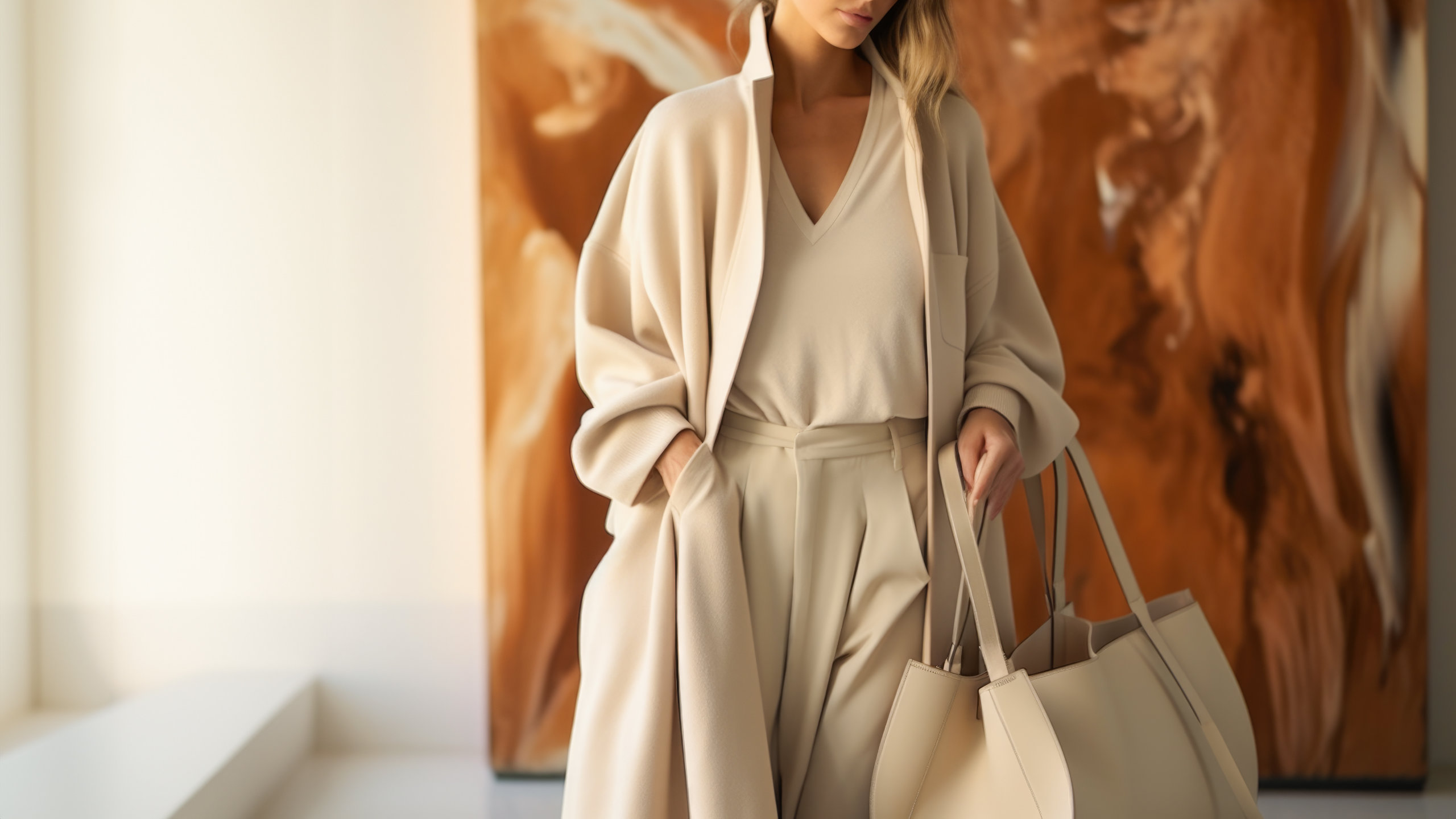
Both avoid logos. Both reach for beige. On a Pinterest moodboard with no context, a solid camel coat could belong to either aesthetic. The moment you look at silhouette, price point, cultural origin, and what the clothes are actually communicating, they are not the same thing at all.
Acubi is not about wealth. Quiet luxury is.
Wikipedia traces quiet luxury to the rise of the capitalist class in Europe and America in the 18th and 19th centuries, where wealthy elites signalled status through quality rather than display. Quiet luxury is fundamentally about wealth signalling. It just whispers instead of shouts.
Brands central to the quiet luxury aesthetic, Loro Piana, Brunello Cucinelli, The Row, Hermès, are among the most expensive in the world. The aesthetic without those price tags is not quiet luxury. It is just minimalism.
Acubi communicates nothing about wealth. You can build a complete acubi wardrobe from a thrift store. The look communicates urban confidence and relaxed Seoul streetwear attitude. That is free.
"Quiet luxury connotes subtly signalling wealth. Acubi connotes nothing of the sort."
Wikipedia: Quiet Luxury, adaptedThe silhouette tells you immediately which one you're looking at.
Quiet luxury fits the body. Tailored trousers that skim the leg cleanly, structured blazers with precise shoulders, a camel coat that falls straight from the shoulder seam. The fit is intentional and polished, never sloppy or exaggerated.
Acubi does the opposite. The oversized silhouette is not accidental. It is the entire point. A perfectly fitted cashmere sweater over tailored trousers is quiet luxury. That same sweater two sizes up, worn loose over wide-leg trousers with a longline coat draped open: that is acubi.
The color is the same. The fit tells you everything.
Different continents, different centuries, different audiences.
Acubi originated in the Hongdae and Sinchon neighborhoods of Seoul in the early 2020s, spread through Douyin and TikTok, and is strongly associated with Gen Z and K-pop idol off-duty styling. It is a product of Korean street culture, not of any wealth tradition.
Quiet luxury traces its cultural DNA to European and American old money. Its modern revival was sparked by the TV series Succession, Gwyneth Paltrow's courtroom wardrobe in 2023, and the broader "stealth wealth" movement among affluent consumers who rejected the logo-mania of the 2010s. It peaked as a social media trend around 2022 to 2023.
Acubi is still growing. Quiet luxury, as a trend moment, has largely passed, though as a way of dressing it never fully disappears because it describes how genuinely wealthy people have always dressed.
Every Element Compared
How the same wardrobe category produces completely different results.
Which One Are You Actually Closer To?
Five questions. Pick what genuinely appeals to you, not what sounds right.
Acubi is your aesthetic
You gravitate toward volume, layering, and effortless cool. The acubi aesthetic is your lane: oversized silhouettes, Seoul streetwear DNA, neutral earth tones, and a look that communicates confidence through relaxation rather than precision. Explore acubi outfits for specific combinations.
Quiet luxury is your aesthetic
You gravitate toward quality materials, precise tailoring, and dressing that communicates investment without announcing it. Quiet luxury rewards spending on fewer, better pieces and prioritizes fabric quality and fit above all else. The Row, Totême, and COS serve this aesthetic at different price points.
You sit in the overlap
Most people in the neutral minimalist space borrow from both. An oversized acubi coat over a quality quiet luxury cashmere knit is a coherent combination. Use the acubi silhouette logic for outerwear and layering, and the quiet luxury principle of fabric investment for your core basics. The two aesthetics complement each other handled with intention.