
What Is Korean Clothing?
Korean clothing is one of the few fashion traditions in the world that has maintained a direct, unbroken line between centuries-old cultural identity and cutting-edge global trends. It covers everything from the silk hanbok worn during ancient Korean dynasties to the oversized, layer-first streetwear that defines what young people wear across Seoul's Hongdae and Sinchon districts today.
The term "Korean clothing" in English most often refers to one of two things: traditional dress, primarily the hanbok, or contemporary Korean fashion, which encompasses street style, K-pop-influenced aesthetics, and minimalist movements like acubi. Understanding Korean clothing properly means understanding both.
"Hanbok is more than just a piece of clothing to Koreans. It is an important custom through which people have practiced courtesy and wished for each family member's good health and well-being."
Korea's Cultural Heritage Administration (CHA), official designation statementA Brief History of Korean Dress
The history of Korean clothing stretches back over 2,000 years. What makes it remarkable is how consistent the core silhouette has remained, even as every other detail changed across dynasties, invasions, and modernization.
Three Kingdoms Period Foundations
The earliest records of Korean clothing appear in Goguryeo tomb murals. Clay figures from Silla confirm a two-piece top-and-bottom structure, establishing the structural foundation of dress, as documented by Korea.net.
Goryeo Dynasty Sino-Mongol Fusion
Korean clothing absorbed Tang Dynasty and Mongolian influences after 30 years of Yuan dynasty rule from 1259 to 1356, affecting court official uniforms as recorded by the Victoria and Albert Museum.
Joseon Dynasty Modesty Standardization
The defining period. Confucian values of modesty and hierarchy regulated garments. Distinct styles for men and women were codified, establishing the classic hanbok silhouette recognized today.
Western Uniform Imperial Mandate
The Korean government required state officials to adopt Western clothing, ending daily hanbok use. Koreans preserved the traditional garments specifically for weddings, holidays, and ceremonies.
National Heritage Formal Designation
South Korea's CHA designated "hanbok saenghwal" as the 154th National Intangible Cultural Heritage, covering making, wearing, and celebrating hanbok. UNESCO registration efforts are currently active.
Modern Global Digital Dominance
Seoul streetwear, K-pop style guides, and acubi minimalist templates reach millions on TikTok. South Korea's apparel market value grows toward $33.7B with projections to $43.1B by 2033.
Hanbok: Korea's Traditional Clothing
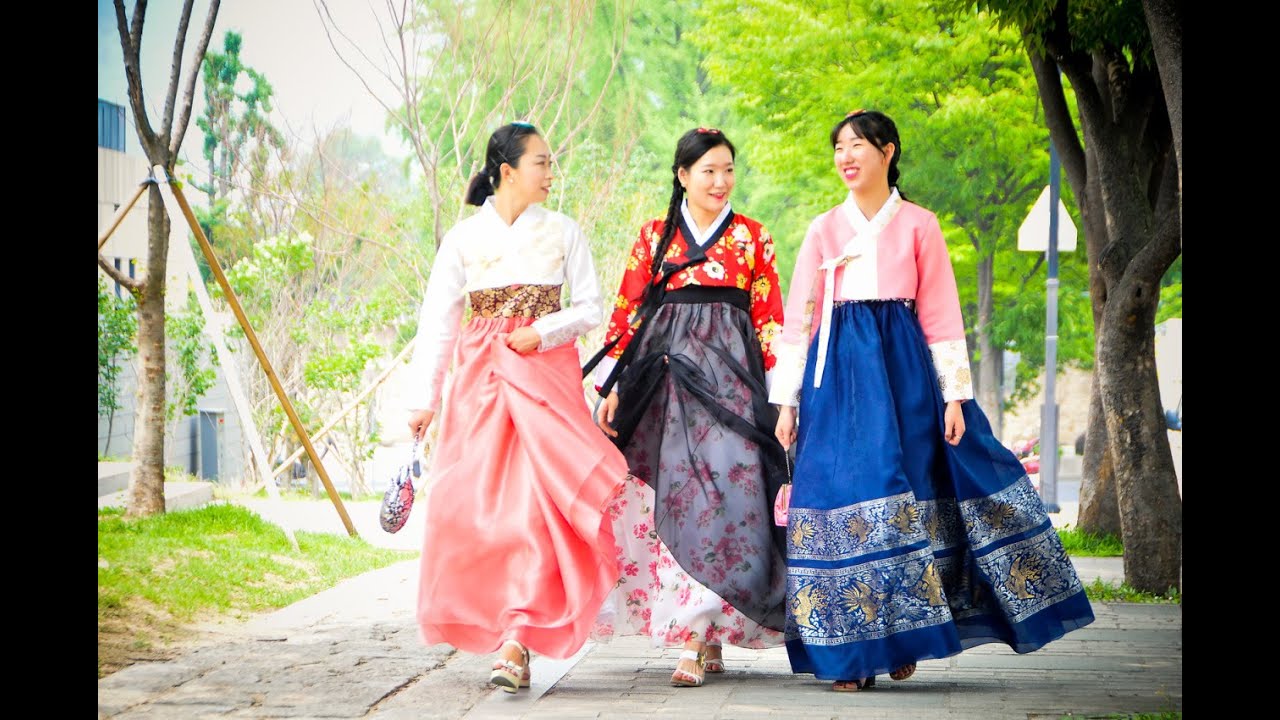
The hanbok (한복) is the most recognized symbol of Korean clothing. The word itself literally means "Korean clothing," and it functions as an umbrella term for thousands of years of Korean dress rather than any single specific garment.
The Structure of Hanbok
Jeogori
The upper jacket. Women's jeogori is short and cropped, sitting below the bust, closed at the front with the traditional otgoreum ribbon.
Chima
The sweeping, high-waisted wrap skirt worn by women. Designed to flow gracefully with movement over a structural sokchima undergarment.
Baji
The generous, wide-leg trousers worn by men. Tied at the ankle with a ribbon called daenim, reflecting Confucian values of dignity and ease.
Otgoreum
The long structural ribbon knotted at the front of the jacket. It serves as both a secure closure and a beautiful visual marker.
Color and Symbolism: Obangsaek
Color in hanbok is never decorative in a casual sense. It derives from the Korean concept of obangsaek, the five cardinal colors drawn from natural elements. Hover or click below to read the symbolic cultural meanings:
Modern Hanbok
Contemporary Korean designers have reimagined hanbok for modern life without abandoning its structural identity. Designers like Lee Young Hee and Kim Young Jin introduced shorter hemlines, new fabric choices, and contemporary silhouettes while keeping the wrapped forms, ribbon closures, and flowing lines that make hanbok immediately recognizable.
The Victoria and Albert Museum holds modern hanbok pieces by Kim Young Jin in its permanent collection. When K-pop groups wear updated hanbok in major performances, it reaches an audience of hundreds of millions and directly drives renewed international demand for the garment.
The Korean Fashion Market: By the Numbers
The scale of Korea's fashion industry reflects how seriously the country treats clothing as both cultural practice and economic engine.
South Korea Apparel Market Size Forecast (USD Billion)
Relative industry size scale. Sources: IMARC Group, Expert Market Research
- South Korea's online clothing market was worth approximately KRW 15.3 trillion in 2023, projected to reach KRW 19.0 trillion by 2026, according to Korean fashion industry research.
- South Korea's e-commerce market is the 6th largest in the world, with clothing among the top spending categories.
- Around 86% of South Korean consumers are active on social media, with 35% making fashion purchases through influencer recommendations.
- Approximately 45% of Korean consumers now pay a premium for sustainable clothing.
- In August 2024, South Korea launched its Fashion Industry Competitiveness Strategy, targeting an increase in global eco-friendly textile market share from 2-3% to 10% by 2030.
- Casual wear led all Korean fashion categories in 2022 with approximately 8.31 trillion South Korean won in retail value, according to KOFOTI data via Statista.
Korean Street Fashion: Seoul to the World
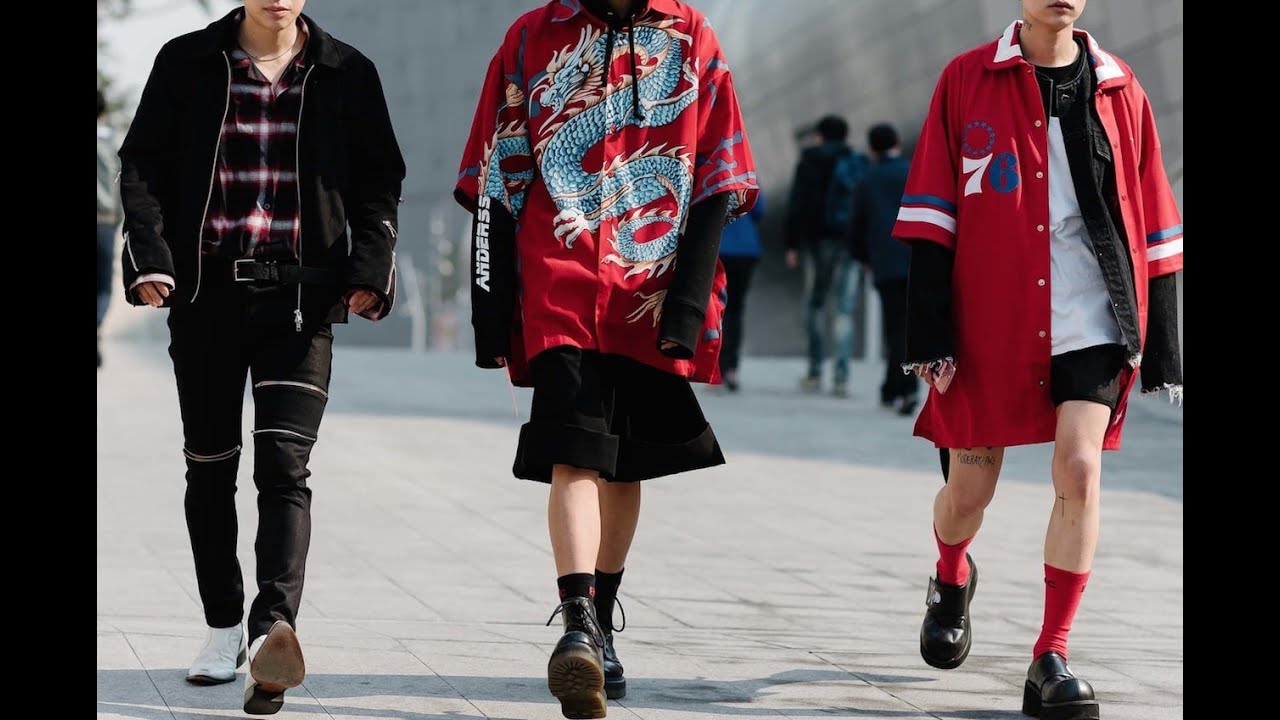
Korean street fashion emerged as a global force through the neighborhoods around Hongdae and Sinchon in Seoul, where young people developed a visual language that mixed Western influences with a distinctly Korean sensibility. The result was something the global fashion industry had not seen before: a street style that was simultaneously relaxed and intentional, gender-fluid, and built around layering logic rather than statement pieces.
K-pop acts have been the single biggest accelerant. Groups like BTS, Blackpink, and NewJeans have put specific Korean brands and aesthetics in front of hundreds of millions of followers, turning local trends into worldwide movements in a matter of days. Blackpink's Lisa alone has over 90 million Instagram followers and serves as a brand ambassador for Celine.
The Core Principles of Korean Street Style
Proportional Layering
Combining oversized outer coats with slim or cropped underlayers to create intentional silhouette contrast.
Tonal Dressing
Building outfits from a single color family rather than loud contrasts. Neutral desaturated tones dominate street styles.
Functional Access
Bucket hats, crossbody pouches, and clean loaders that serve purpose while grounding the total outfit drape.
Key Categories of Korean Clothing
Casual Wear
Casual wear dominates the South Korean fashion market. K-pop and the widespread shift to remote working both reinforced consumer preference for relaxed, versatile clothing that looks intentional without being formal. Online platforms like Musinsa, which recorded transaction value of approximately 2.3 trillion Korean won in 2021, are the primary discovery channels for young consumers.
Korean Streetwear
The streetwear segment is anchored by independent Korean labels that blend technical materials with strong aesthetic vision. Brands discovered through Musinsa, Ably, and Zigzag (the "big 5" Korean fashion platforms) have built significant followings by offering the kind of design-forward basics that mainstream Western streetwear rarely produces at the same quality level.
Sportswear
The fastest-growing segment in Korean clothing. Key Korean sportswear brands including XEXYMIX, Black Yak, Pro-Specs, and FCMM have built significant followings by combining technical performance with strong aesthetic design, reaching consumers who want athletic clothing that works both at the gym and on the street.
Sustainable Fashion
Brands like RE;CODE, ul:kin, and PARTsPARTs are leading the sustainability push, adopting eco-friendly printing, plant-based dyes, and waterless dyeing processes. Around 30% of Korean consumers donate unwanted clothing rather than discarding it, and 55% have purchased second-hand fashion, according to Korean fashion industry research.
Luxury and Designer
International luxury brands have made significant investments in the Korean market. Jacquemus opened its fifth Korean store at Shinsegae Gangnam. Loewe launched its first "Casa Loewe" flagship store in Seoul. Samsung C&T's Fashion Group now operates 32 brands across 1,179 stores with five global offices, including international labels managed out of Seoul.
Korean Style vs. Other Aesthetics
Korean fashion shares visual DNA with several other global aesthetics but maintains a distinct identity. Here is how it compares:
How to Build a Korean-Inspired Wardrobe
You do not need to be in Seoul to dress in Korean style. The core principles translate into any wardrobe with the right foundation pieces and the right mindset about how clothing is supposed to work together.
- Build a neutral base first. Korean fashion, particularly the acubi and minimalist streetwear direction, is built on white, cream, gray, and beige. These colors layer naturally and keep the focus on silhouette rather than print. Buy these pieces in quality fabrics you will actually reach for.
- Think in proportions, not individual items. Korean street style is less about clothes being perfectly fitted and more about the relationship between pieces. An oversized top over wide-leg trousers creates one silhouette. A cropped jacket over a longer shirt creates another. Buy with layering logic in mind.
- Invest in one or two outer pieces that do the work. A longline coat, an oversized structured blazer, or a clean puffer jacket does most of the heavy lifting. The rest can be simple basics that disappear underneath.
- Keep accessories genuinely minimal. Small crossbody bags, simple silver jewelry, clean sneakers or loafers. Korean style avoids accessories that compete with the outfit. One understated piece per zone is always the right call.
- For hanbok references, look for modern pieces that carry traditional construction: wrapped silhouettes, silk-adjacent fabric textures, or garments with visible ribbon or knot details. A number of Korean designers produce contemporary hanbok pieces designed for daily wear.
Frequently Asked Questions
Traditional Korean clothing is called hanbok (한복). The word literally means "Korean clothing" and refers to the entire tradition of Korean dress rather than one single garment. It consists of a jeogori top and either a chima skirt for women or baji trousers for men, closed with a ribbon called the otgoreum. The hanbok's basic two-piece structure has been documented in Korean historical records dating back to the Three Kingdoms period (57 BC to 668 AD).
Hanbok is worn on special occasions including Seollal (Lunar New Year), Chuseok (Harvest Festival), weddings, and coming-of-age ceremonies. It is also worn at cultural festivals and tourist locations across South Korea. Modern versions appear on K-pop performers at major award shows and on celebrities at international red carpet events. South Korea officially celebrates Hanbok Day on October 21st each year.
Korean street fashion is distinct because of its emphasis on deliberate proportions, tonal dressing, and understated confidence. It avoids loud branding and heavy graphics in favor of silhouette, texture, and layering logic. It has also been a consistent leader in gender-neutral and gender-fluid styling, years before Western fashion adopted the conversation. The result is a style that always looks considered without looking like it is trying too hard.
Acubi is a minimalist Korean fashion aesthetic centered on neutral tones (white, cream, gray, beige), oversized layering, and a quiet confidence in how clothing is worn. It is directly rooted in Korean street fashion and became globally recognized through TikTok and Douyin. It represents the most internationally influential current within Korean fashion right now. See our full guide to what is acubi fashion.
South Korea's apparel market was valued at USD 33.7 billion in 2024 and is projected to reach USD 43.1 billion by 2033, growing at a CAGR of 2.77%, according to IMARC Group. South Korea is the 6th largest e-commerce market in the world, with clothing among the top online spending categories. Textile and clothing exports reached USD 13.4 billion in 2023.
Sustainability is a growing priority in Korean fashion. Around 45% of Korean consumers pay a premium for sustainable clothing, and 55% have purchased second-hand fashion. Brands like RE;CODE, ul:kin, and PARTsPARTs are building their business model around eco-friendly practices. South Korea's 2024 Fashion Industry Competitiveness Strategy includes a target to increase global eco-friendly textile market share from 2-3% to 10% by 2030.